



























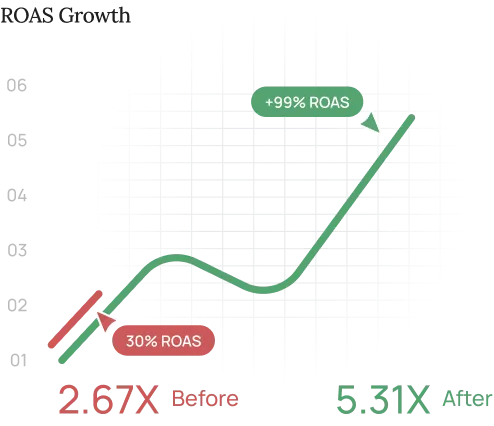





Amazon advertising is becoming more data-driven, and sellers are getting new tools to understand campaign performance without spending hours reviewing individual reports. In September 2026, Amazon Ads announced an AI-powered campaign intelligence dashboard designed to identify performance issues and recommend improvements to targeting, bids, and budgets.
The new dashboard is planned for US Sponsored Ads advertisers in October 2026. It brings campaign insights and recommended actions into the campaign overview page, helping advertisers understand what is affecting performance and where adjustments may be useful.
For Amazon sellers, the important question is not simply whether AI can optimize advertising. It is how to use AI recommendations to improve campaign efficiency without sacrificing sales, profit margins, or control over advertising spend.
This guide explains how Amazon PPC campaign intelligence works, what the new dashboard offers, how sellers can evaluate its recommendations, and how to incorporate AI insights into a practical advertising strategy.
What Is Amazon PPC Campaign Intelligence?
Amazon PPC campaign intelligence refers to the use of advertising data and AI-driven analysis to identify campaign performance patterns, diagnose potential problems, and recommend optimization actions.
Amazon's new campaign intelligence dashboard brings these capabilities into the Sponsored Ads campaign overview. Instead of requiring advertisers to investigate every performance change manually, the dashboard is designed to explain what is happening and suggest potential improvements.
According to Amazon Ads, recommendations can cover three primary areas:
- Targeting: Identify opportunities to reach more relevant shoppers or adjust existing targeting.
- Bidding: Recommend bid changes when keyword or campaign performance indicates a potential opportunity.
- Budget management: Highlight campaigns where budget adjustments may help capture additional traffic or sales.
Advertisers can review recommendations and choose to apply, edit, or skip them. The dashboard therefore provides decision support rather than automatically making every recommended change.
Sellers can learn more about campaign structure, bid optimization, keyword harvesting, and performance reporting through Amazon PPC management services.
What Did Amazon Announce in September 2026?
On September 22, 2026, Amazon Ads announced new tools intended to help small businesses get more value from their Sponsored Ads campaigns.
One announcement was the AI-powered campaign intelligence dashboard. Amazon said the feature would be available to all Sponsored Ads advertisers in the United States in October 2026.
The dashboard is designed to analyze campaign activity, explain factors affecting results, and recommend actions supported by visual explanations of their likely impact.
For example, it might identify a high-performing keyword that is losing impression share and suggest a bid adjustment. It could also recommend targeting adjustments to help reach shoppers who have browsed a product but have not purchased it.
These recommendations give advertisers a more structured starting point for optimization. Instead of making changes based only on a sudden increase in ACoS or a drop in impressions, sellers can investigate the underlying performance signals before deciding what to do.
Feature availability should be checked inside the Amazon Ads console because rollout timing and marketplace eligibility can differ.
Read the official Amazon Ads announcement for the original information.
How the New Amazon AI Dashboard Works
1. Analyzes Campaign Performance
The system examines campaign activity to identify factors that may be affecting advertising results. These insights can help advertisers recognize performance changes that might otherwise require manual investigation across multiple reports.
For instance, a campaign might receive fewer impressions even though its historical conversion rate remains strong. The dashboard could identify declining impression share as a potential issue and recommend reviewing the bid.
The recommendation is a starting point for investigation. Sellers should still check whether the change is caused by competition, budget limitations, listing performance, or another factor.
2. Identifies Targeting Opportunities
Targeting determines which shopper searches, products, or audiences can trigger advertising.
Amazon's announced examples include recommendations to adjust targeting to reach shoppers who have browsed but not purchased. Such suggestions may help sellers explore additional opportunities to engage interested customers.
However, broader targeting is not automatically better. A campaign can generate more clicks while producing fewer profitable orders if the additional traffic has weak purchase intent.
Sellers should evaluate new targeting opportunities using search relevance, conversion history, CPC, and profitability.
3. Recommends Bid Adjustments
Bids influence how much an advertiser is willing to pay for a click in an advertising auction. Increasing a bid may improve the opportunity to win impressions, but it can also increase advertising costs.
The dashboard may identify a keyword that is losing impression share and recommend a bid adjustment to recover visibility.
Before accepting the suggestion, sellers should examine the keyword's conversion rate, average CPC, attributed sales, and contribution margin. A keyword that generates substantial revenue can still be unprofitable if its acquisition cost is too high.
For a deeper review of campaign structure and bid management, use this Amazon PPC audit checklist.
4. Highlights Budget Adjustments
Budget recommendations can help advertisers identify campaigns that may be limited by their available daily spend.
A campaign running out of budget early in the day may miss additional opportunities to reach shoppers. Increasing its budget could help capture more traffic, provided the campaign generates sales at an acceptable cost.
Before increasing a budget, check whether the campaign is genuinely profitable and whether its additional clicks are likely to convert. Moving money away from a weak campaign and toward a proven performer may be a better decision than increasing total account spend.
5. Lets Advertisers Apply, Edit, or Skip Recommendations
Amazon's announcement states that recommendations include explanations and visuals illustrating their likely impact. Advertisers can apply, edit, or skip individual actions.
This flexibility matters because campaign performance cannot be judged independently of business objectives.
A seller preparing for a product launch may accept a different level of advertising cost than a seller managing an established product with a strict profitability target. Both accounts may receive recommendations, but the correct response can differ.
Five Ways Amazon PPC Campaign Intelligence Can Help Sellers
1. Reduce Time Spent Reviewing Reports
Managing multiple campaigns, products, and keywords can create a significant reporting workload. Advertisers often need to compare impressions, clicks, CPC, orders, sales, and budgets before deciding what to change.
An intelligence dashboard can simplify the initial investigation by highlighting potential problems and suggested actions in one place. It does not eliminate detailed reporting, but it can help sellers prioritize which campaigns deserve attention first.
2. Identify Lost Impression Share Opportunities
A keyword that previously generated profitable sales may lose visibility as auction competition changes.
The dashboard may identify this pattern and suggest reviewing the bid. Sellers can then determine whether a bid increase is commercially justified.
A keyword with a strong conversion rate and healthy margins may deserve additional investment. A keyword with high CPC and inconsistent conversions may not.
3. Improve Budget Allocation
Not every campaign deserves the same budget. Product margins, sales volume, seasonality, conversion rates, and strategic priorities all influence how much a seller should spend.
Campaign intelligence can help highlight possible budget changes. Advertisers should use these recommendations alongside their own profitability analysis to decide where additional spend is most likely to produce value.
4. Discover Targeting Improvements
Targeting recommendations can help sellers identify additional search terms, product targets, or audience opportunities worth investigating.
However, discovering a relevant opportunity is not the same as proving that it is profitable. New targeting should be monitored for impressions, clicks, orders, search relevance, and cost.
If performance remains weak after sufficient data has accumulated, sellers can revise the targeting or reduce exposure.
5. Support Consistent Optimization Decisions
Manual campaign management can become inconsistent when different team members use different rules for bids, budgets, and negative keywords.
A dashboard that explains its recommendations can provide a common starting point for review. Teams can use that information alongside documented performance targets and account-level rules.
How to Evaluate AI Recommendations Before Applying Them
AI recommendations should be evaluated against the economics of the product, not accepted simply because they come from an advertising platform.
The following table provides a practical framework for reviewing common PPC optimization decisions.
| Recommendation | What to Check | Potential Action |
|---|---|---|
| Increase a keyword bid | Conversion rate, CPC, impression share, and break-even ACoS | Apply or edit if additional visibility is commercially justified. |
| Increase campaign budget | Budget utilization, sales, ACoS, and marginal performance | Increase gradually if the campaign remains profitable. |
| Expand targeting | Search relevance, historical conversions, and expected CPC | Test with controlled exposure. |
| Recover lost visibility | Competition, placement performance, and keyword value | Investigate the cause before raising bids. |
| Reduce wasted spend | Search terms, irrelevant traffic, and non-converting targets | Adjust bids or add negative keywords where appropriate. |
Calculate Your Break-Even ACoS
Advertising cost of sales, or ACoS, measures advertising spend relative to attributed advertising sales.
ACoS = Advertising spend / Attributed advertising sales × 100
Suppose a campaign spends $200 and generates $1,000 in attributed sales. Its ACoS is 20%.
Whether that is profitable depends on the product's contribution margin after relevant costs, including product cost, Amazon fees, fulfillment, discounts, and other variable expenses.
A seller with a 25% pre-ad contribution margin may have more room to advertise than a seller with a 15% margin. The actual break-even point depends on which costs have been included in the calculation.
A bid recommendation should therefore be evaluated against the product's economics rather than a universal ACoS target.
Example: Evaluating a Suggested Bid Increase
Consider a hypothetical campaign with the following performance:
| Metric | Current Performance |
|---|---|
| Advertising spend | $200 |
| Attributed sales | $1,000 |
| ACoS | 20% |
| Average CPC | $1.00 |
| Orders | 20 |
Now imagine the dashboard recommends increasing the bid on a high-performing keyword because its impression share is declining.
The seller should investigate whether the keyword is losing valuable sales opportunities and whether the current ACoS leaves room for higher acquisition costs.
If the keyword generates profitable orders and the product has sufficient inventory, a controlled bid increase may be reasonable. The seller should then compare performance before and after the adjustment.
If the higher bid increases CPC without generating enough additional sales, the seller may need to reduce the bid or reverse the change.
The key lesson is that a recommendation identifies a possible opportunity. Actual results determine whether the change should remain in place.
How to Measure the Results of AI-Powered PPC Optimization
Sellers should measure optimization outcomes using several metrics instead of relying on ACoS alone.
ACoS and ROAS
ACoS measures advertising spend relative to attributed sales. Return on ad spend, or ROAS, measures attributed sales generated per advertising dollar.
ROAS = Attributed advertising sales / Advertising spend
A lower ACoS and higher ROAS can indicate improved advertising efficiency, but neither metric alone proves that total business profit has increased.
TACoS
Total advertising cost of sales, or TACoS, compares advertising spend with total sales, including organic sales.
TACoS = Advertising spend / Total sales × 100
TACoS helps sellers assess advertising in the context of the broader business. ACoS might increase during a growth initiative while total sales and organic performance improve. Conversely, a low ACoS may conceal declining total revenue.
Conversion Rate
Conversion rate shows how effectively clicks translate into orders. If a recommendation increases traffic but conversion rate falls substantially, the seller should investigate search relevance, listing quality, price competitiveness, and customer feedback.
CPC and Impression Share
CPC helps track the cost of traffic, while impression share provides context for visibility opportunities when the relevant reporting is available. Together, these metrics help sellers determine whether bid changes are attracting useful traffic at a sustainable cost.
Explore the Amazon advertising tools used by Sellers Umbrella for a broader view of campaign analysis and optimization.
Why Product Listing Quality Still Matters
Campaign optimization cannot compensate for every weakness in a product listing.
An advertisement may attract the right shopper, but the shopper still needs a compelling reason to purchase. Unclear product benefits, weak images, uncompetitive pricing, limited reviews, and missing product information can reduce conversion rates.
If a campaign receives clicks but generates few orders, increasing bids may simply increase the cost of a problem that originates on the product page.
Before scaling spend, review the product title, images, bullet points, A+ Content, pricing, and customer objections.
Sellers can explore Amazon listing optimization services to understand how keyword relevance and conversion-focused content fit into a broader growth strategy.
AI Recommendations vs. Expert Amazon PPC Management
AI can help process advertising data and surface patterns quickly. Experienced campaign managers provide the commercial context needed to decide which opportunities are worth pursuing.
| Area | AI-Powered Recommendations | Expert Campaign Management |
|---|---|---|
| Performance analysis | Highlights patterns and potential issues. | Interprets patterns in the context of account objectives. |
| Bid adjustments | Suggests potential bid changes. | Evaluates margins, competition, and campaign history. |
| Budget allocation | Identifies potential budget opportunities. | Balances spend against profitability, inventory, and growth priorities. |
| Targeting | Surfaces possible targeting improvements. | Assesses relevance and builds a structured testing approach. |
| Business strategy | Provides data-driven recommendations. | Aligns advertising with launches, seasonality, and long-term goals. |
These capabilities can complement each other. AI may help teams identify opportunities faster, while experienced managers determine which actions make sense for a particular brand.
Sellers Umbrella provides Amazon PPC management services covering campaign optimization, keyword harvesting, negative keyword management, and performance reporting.
A Practical Workflow for Using Amazon Campaign Intelligence
Sellers can incorporate the dashboard into a repeatable optimization process.
- Establish performance benchmarks. Record current spend, sales, ACoS, ROAS, CPC, conversion rate, and profitability targets.
- Review the recommendation. Understand what the dashboard identifies as the problem and why it proposes a particular action.
- Validate the business context. Check margins, inventory, pricing, listing quality, seasonality, and strategic restrictions.
- Apply, edit, or skip. Make the decision based on likely commercial impact, not simply the existence of a recommendation.
- Record the change. Document the action, date, reason, and expected outcome.
- Measure the results. Compare appropriate metrics before and after the change, allowing sufficient time for meaningful data to accumulate.
- Refine the strategy. Retain effective changes, reverse unhelpful ones, and use the findings to improve future decisions.
This process makes campaign intelligence part of an accountable optimization strategy rather than a series of isolated adjustments.
Is Amazon PPC Campaign Intelligence Available to Every Seller?
Amazon announced that its AI-powered campaign intelligence dashboard would be available to all Sponsored Ads advertisers in the United States in October 2026.
The feature is intended to surface recommendations on the campaign overview page, with options to apply, edit, or skip each action.
Advertisers should check their own Amazon Ads accounts to confirm availability. The US rollout announcement should not be interpreted as confirmation that the feature is available in every international marketplace.
Sellers should also distinguish this recommendation dashboard from separate automation capabilities. A recommendation that requires an advertiser's approval is different from a feature that makes changes automatically.
For further announcements, visit the official Amazon Ads updates page.
Frequently Asked Questions
What is Amazon PPC campaign intelligence?
Amazon PPC campaign intelligence is the use of advertising data and AI-driven analysis to identify performance issues and recommend improvements to targeting, bidding, and budgets. Amazon announced a new dashboard that brings these insights into the Sponsored Ads campaign overview.
When will Amazon's AI campaign intelligence dashboard be available?
Amazon announced the dashboard on September 22, 2026, with availability planned for US Sponsored Ads advertisers in October 2026. Sellers should check their advertising accounts for current access and eligibility.
Does Amazon's campaign intelligence dashboard automatically change bids?
The announced dashboard allows advertisers to apply, edit, or skip recommendations. Its recommendations should not be confused with separate automated optimization features that may operate under different settings.
Can AI-powered campaign intelligence reduce ACoS?
It may help identify opportunities to improve campaign efficiency, but lower ACoS is not guaranteed. Results depend on keyword relevance, auction costs, conversion rates, product margins, competition, and the decisions advertisers make after reviewing recommendations.
Should sellers accept every AI-generated PPC recommendation?
No. Sellers should evaluate each recommendation against campaign performance, product profitability, inventory, and business objectives. Some recommendations may be worth applying, others may need modification, and some may not suit the account's strategy.
Is Amazon PPC campaign intelligence available outside the US?
Amazon's announcement specified US availability for October 2026. Sellers operating in other marketplaces should verify availability directly in their Amazon Ads accounts rather than assuming the feature has launched globally.
How is campaign intelligence different from Amazon PPC automation?
Campaign intelligence helps advertisers understand performance and evaluate suggested actions. PPC automation can involve systems that execute defined changes with less manual intervention. The degree of automation depends on the specific tool and its settings.
Does AI replace an Amazon PPC manager?
AI can reduce manual analysis and help identify potential opportunities, but profitable campaign management still requires commercial judgment. Sellers need to account for margins, inventory, listing quality, strategic priorities, and the wider impact of advertising on their business.
Final Thoughts
Amazon's AI-powered campaign intelligence dashboard represents another step toward more accessible, data-driven advertising optimization. By surfacing performance insights and recommending changes to targeting, bids, and budgets, the feature can help sellers investigate campaign issues and identify potential opportunities more efficiently.
However, better recommendations do not automatically translate into better profits. Sellers still need to evaluate the economics behind each decision, monitor the effects of changes, and ensure advertising supports their broader business goals.
The strongest approach combines AI-driven insights with disciplined testing, accurate profitability analysis, and experienced campaign management. That is how Amazon sellers can use new advertising technology to make more informed decisions while maintaining control over their PPC performance.
